



Harry Corvers
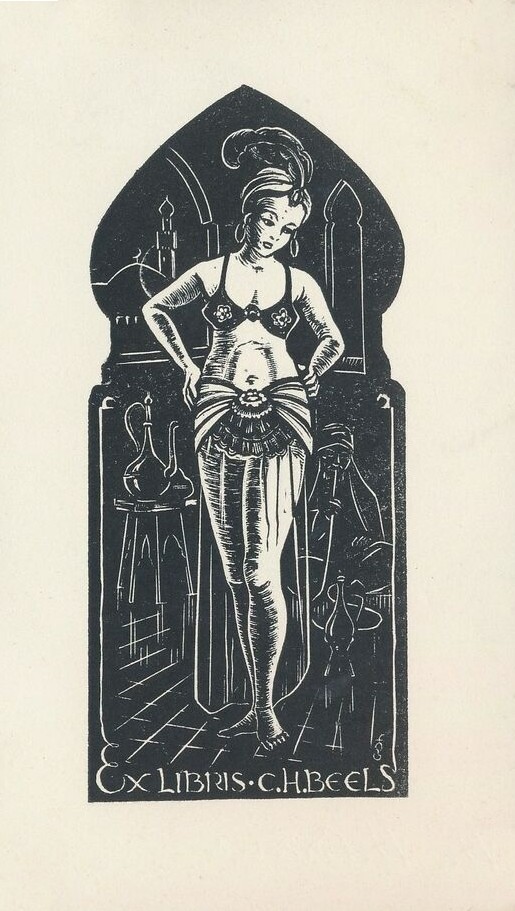
Biografía
Harry Corvers (’s-Hertogenbosch, 1913 – Tilburg, 1982), nacido como Henricus Antonius Maria Corvers, fue un destacado artista plástico, ilustrador y grabador neerlandés. A lo largo de su trayectoria trabajó también bajo el seudónimo Frank Gemul y, durante su etapa religiosa, utilizó el nombre de fray Gamaliël.
Estudió durante seis años en la Academia Libre de Bellas Artes de Tilburg y completó posteriormente formación en la Escuela Gráfica. En su juventud ingresó en la Congregación de los Hermanos de Tilburg, donde desarrolló una intensa producción artística de temática religiosa y trabajó como grafista en la imprenta del RK Jongensweeshuis.
Durante aquellos años realizó ilustraciones, caligrafías y portadas para publicaciones infantiles de la congregación, entre ellas la revista De Engelbewaarder. Su obra de esta etapa aparece firmada frecuentemente con las iniciales “fg”, correspondientes a frater Gamaliël.
En 1944 abandonó la congregación y comenzó una nueva etapa artística más libre y personal. Durante doce años ejerció como profesor de enseñanza artística y técnica, mientras desarrollaba una producción cada vez más variada y comercial.
Corvers destacó por su extraordinaria versatilidad. Realizó pinturas, dibujos, acuarelas, caligrafías, linograbados, xilografías y grabados en cobre. También diseñó decorados teatrales, esculturas y vidrieras de hormigón para iglesias y escuelas de ciudades belgas como Seraing, Arlon, Messancy y Bruselas.
Uno de los aspectos más importantes de su legado artístico fue la extensa documentación gráfica de Tilburg y sus alrededores. Produjo centenares de dibujos de calles, edificios históricos y paisajes urbanos para el Archivo Regional de Tilburg, convirtiéndose en un valioso cronista visual de la ciudad antes de las grandes transformaciones urbanísticas del siglo XX.
Corvers mantuvo además una estrecha relación con el parque temático neerlandés Efteling, donde colaboró entre 1965 y 1966 y también como artista freelance. Fue amigo del célebre ilustrador Anton Pieck y participó en diversos proyectos del parque, como los primeros planos ilustrados con la figura de Langnek, los textos caligrafiados del cuento Los Seis Sirvientes y elementos del Diorama y de la atracción Las Ninfeas Indias.
La obra de Harry Corvers combina sensibilidad artística, dominio técnico y una notable capacidad narrativa. Su legado continúa especialmente vivo en Tilburg, donde sus dibujos constituyen hoy una importante memoria visual de la ciudad y de su patrimonio arquitectónico.
Biography
Harry Corvers (’s-Hertogenbosch, 1913 – Tilburg, 1982), born Henricus Antonius Maria Corvers, was a Dutch artist, illustrator and engraver known for his versatility and refined graphic work. During his life he also worked under the pseudonym Frank Gemul and, in his religious years, under the name brother Gamaliël.
He studied for six years at the Free Academy of Fine Arts in Tilburg and later attended the Graphic School. As a young man he joined the Brothers of Tilburg congregation, where he produced mainly religious artwork and worked as a graphic artist for the printing house of the RK Boys’ Orphanage.
During this period he designed illustrations, calligraphic works and covers for children’s publications such as De Engelbewaarder. Many works from these years were signed with the initials “fg”, referring to frater Gamaliël.
After leaving the congregation in 1944, Corvers entered a more independent artistic phase. He taught technical and artistic education for twelve years while continuing to expand his creative production.
His artistic work included paintings, drawings, watercolours, calligraphy, linocuts, woodcuts and copper engravings. He also created theatre sets, sculptures and stained concrete windows for churches and schools in Belgian cities including Seraing, Arlon, Messancy and Brussels.
One of the most remarkable aspects of his legacy is the large collection of drawings documenting Tilburg and its surroundings. Through hundreds of urban sketches and architectural studies, Corvers preserved the visual memory of many places before the major urban changes of the twentieth century.
Corvers also collaborated with the famous Dutch theme park Efteling, working there during the mid-1960s and later as a freelance artist. A close friend of illustrator Anton Pieck, he contributed illustrated maps, calligraphic texts and decorative elements for attractions such as The Six Servants, the Diorama and The Indian Water Lilies.
Harry Corvers is remembered today as a highly versatile artist whose work combines technical mastery, narrative imagination and historical value, especially in relation to the city of Tilburg.
Biographie
Harry Corvers (’s-Hertogenbosch, 1913 – Tilburg, 1982), né Henricus Antonius Maria Corvers, fut un artiste, illustrateur et graveur néerlandais reconnu pour la diversité de son œuvre graphique. Il travailla également sous le pseudonyme Frank Gemul ainsi que sous le nom religieux de frère Gamaliël.
Il étudia pendant six ans à l’Académie libre des Beaux-Arts de Tilburg avant de poursuivre sa formation à l’École graphique. Jeune homme, il entra dans la congrégation des Frères de Tilburg, où il réalisa principalement des œuvres à caractère religieux et travailla comme graphiste pour l’imprimerie de l’orphelinat catholique RK.
Durant cette période, il créa illustrations, calligraphies et couvertures pour différentes publications destinées à la jeunesse, notamment la revue De Engelbewaarder. Ses œuvres de cette époque portent souvent les initiales “fg”, en référence à frater Gamaliël.
Après avoir quitté la congrégation en 1944, Corvers entama une nouvelle phase plus indépendante et personnelle. Pendant douze ans, il enseigna les arts et les techniques tout en développant une production artistique plus libre.
Son œuvre comprend peintures, dessins, aquarelles, calligraphies, linogravures, gravures sur bois et gravures sur cuivre. Il réalisa également des décors de théâtre, des sculptures ainsi que des vitraux en béton pour des églises et des écoles de villes belges telles que Seraing, Arlon, Messancy et Bruxelles.
Une part essentielle de son héritage artistique réside dans les centaines de dessins consacrés à Tilburg et à ses environs. Grâce à cette documentation graphique, Corvers conserva la mémoire visuelle de nombreux quartiers et bâtiments avant les transformations urbaines du XXe siècle.
Corvers entretint aussi une relation étroite avec le célèbre parc néerlandais Efteling, où il collabora dans les années 1960 comme artiste et illustrateur indépendant. Ami proche d’Anton Pieck, il participa à la création de cartes illustrées, de textes calligraphiés et de plusieurs éléments décoratifs du parc.
Aujourd’hui, Harry Corvers est considéré comme un artiste particulièrement polyvalent dont l’œuvre associe maîtrise technique, sens narratif et valeur documentaire, notamment pour l’histoire visuelle de Tilburg.