



Fritz Gilsi
Biografía
Fritz Gilsi —Hans Fritz Gilsi— nació en Zúrich el 12 de marzo de 1878 y murió en St. Gallen el 11 de mayo de 1961. Fue pintor, grabador, dibujante y caricaturista suizo, especialmente reconocido por su obra gráfica y por sus aguafuertes.
Hijo del litógrafo Hans Gilsi, pasó parte de su infancia en París, ciudad a la que su familia se trasladó en 1879. Allí inició su formación artística en la escuela de dibujo Bernard Palissy. En 1895 regresó a Suiza y asistió a cursos en la Kunstgewerbeschule de Zúrich, donde coincidió con Augusto Giacometti. Posteriormente continuó sus estudios en la escuela de dibujo de la Industrie- und Gewerbeschule de St. Gallen.
Antes de concluir su formación aceptó un puesto en París como diseñador industrial de tejidos y papeles pintados. Aquella experiencia en el ámbito de las artes aplicadas influyó en su dominio de la línea, la composición decorativa y el tratamiento ornamental de la imagen.
Desde 1904 desarrolló la mayor parte de su carrera en St. Gallen, aunque realizó estancias de estudio en París. En 1922, año en que falleció su esposa Emmy, fue nombrado profesor principal de la sección artística de la Kunstgewerbeschule de St. Gallen, cargo que mantuvo hasta su jubilación en 1944.
Además de su labor docente y artística, Gilsi colaboró como caricaturista político en la revista satírica suiza Nebelspalter. Su hijo, René Gilsi, siguió una trayectoria semejante como artista y colaborador de la misma publicación.
En sus primeros años como pintor se aproximó al impresionismo, pero con el tiempo evolucionó hacia un lenguaje más simbolista y decorativo. Realizó óleos, retratos infantiles, pinturas murales y numerosas obras gráficas de ocasión, muchas de ellas con motivos simbólicos y una marcada importancia del contorno.
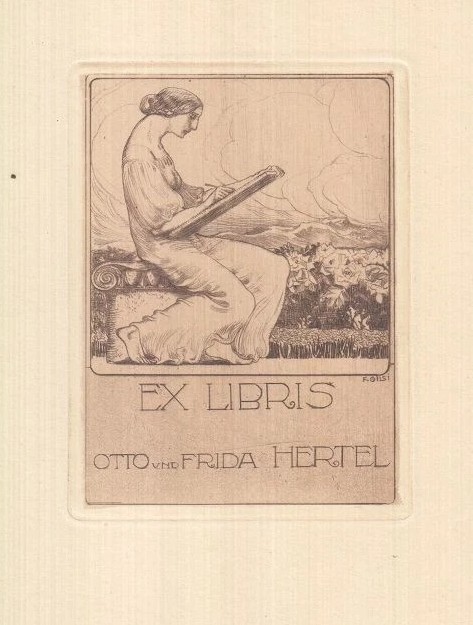
Su nombre quedó especialmente unido al grabado. Produjo alrededor de ochenta aguafuertes, que le dieron reconocimiento más allá de Suiza. La crítica de su tiempo valoró en ellos la fuerza narrativa, el dominio técnico, los contrastes de luz y sombra y su interés por las composiciones arquitectónicas y alegóricas.
Entre sus obras públicas figuran murales para el Museo Histórico y Etnográfico de St. Gallen y decoraciones para el teatro municipal de la ciudad. En 1914 participó en la Exposición Internacional de Gráfica de Leipzig, donde recibió una medalla estatal junto a artistas como Ferdinand Hodler, Édouard Vallet y Max Buri.
Fritz Gilsi ocupa un lugar destacado dentro de la gráfica suiza de la primera mitad del siglo XX. Su obra combina oficio, sensibilidad simbólica y una estrecha relación entre arte aplicado, ilustración, caricatura y grabado.
Biography
Fritz Gilsi —Hans Fritz Gilsi— was born in Zurich on 12 March 1878 and died in St. Gallen on 11 May 1961. He was a Swiss painter, printmaker, draughtsman and caricaturist, particularly admired for his graphic work and etchings.
The son of the lithographer Hans Gilsi, he spent part of his childhood in Paris, where his family moved in 1879. There he began his artistic training at the Bernard Palissy drawing school. In 1895 he returned to Switzerland and attended courses at the Kunstgewerbeschule in Zurich, where he studied alongside Augusto Giacometti. He later continued his studies at the drawing school of the Industrie- und Gewerbeschule in St. Gallen.
Before completing his studies, Gilsi accepted a position in Paris as an industrial designer for textiles and wallpapers. This experience in the applied arts influenced his command of line, decorative composition and ornamental design.
From 1904 onwards he spent most of his professional life in St. Gallen, interrupted by study periods in Paris. In 1922, the year his wife Emmy died, he was appointed head teacher of the artistic department of the Kunstgewerbeschule in St. Gallen, a post he held until his retirement in 1944.
Alongside his teaching and artistic work, Gilsi contributed political cartoons to the Swiss satirical magazine Nebelspalter. His son, René Gilsi, followed a similar path as an artist and contributor to the same publication.
As a painter, Gilsi was initially close to Impressionism, but later moved towards a more Symbolist and decorative language. He produced oils, children’s portraits, murals and numerous occasional graphic works, many of them marked by symbolic motifs and strong outlines.
His reputation was especially linked to printmaking. He created around eighty etchings, which brought him recognition beyond Switzerland. Contemporary critics praised their narrative strength, technical control, contrasts of light and shadow, and his interest in architectural and allegorical compositions.
Among his public works were murals for the Historical and Ethnographic Museum of St. Gallen and decorations for the city theatre. In 1914 he took part in the International Graphic Art Exhibition in Leipzig, where he received a state medal alongside artists such as Ferdinand Hodler, Édouard Vallet and Max Buri.
Fritz Gilsi holds an important place in Swiss graphic art of the first half of the twentieth century. His work combines craftsmanship, symbolic sensitivity and a close relationship between applied art, illustration, caricature and printmaking.
Biographie
Fritz Gilsi —Hans Fritz Gilsi— est né à Zurich le 12 mars 1878 et mort à St. Gallen le 11 mai 1961. Il fut peintre, graveur, dessinateur et caricaturiste suisse, particulièrement reconnu pour son œuvre graphique et ses eaux-fortes.
Fils du lithographe Hans Gilsi, il passa une partie de son enfance à Paris, où sa famille s’installa en 1879. Il y commença sa formation artistique à l’école de dessin Bernard Palissy. En 1895, il retourna en Suisse et suivit des cours à la Kunstgewerbeschule de Zurich, où il côtoya Augusto Giacometti. Il poursuivit ensuite sa formation à l’école de dessin de l’Industrie- und Gewerbeschule de St. Gallen.
Avant d’achever ses études, Gilsi accepta à Paris un poste de dessinateur industriel pour les tissus et les papiers peints. Cette expérience dans les arts appliqués influença sa maîtrise de la ligne, de la composition décorative et de l’ornement.
À partir de 1904, il passa l’essentiel de sa carrière à St. Gallen, tout en effectuant des séjours d’étude à Paris. En 1922, année de la mort de son épouse Emmy, il fut nommé professeur principal de la section artistique de la Kunstgewerbeschule de St. Gallen, poste qu’il conserva jusqu’à sa retraite en 1944.
Parallèlement à son activité d’enseignant et d’artiste, Gilsi collabora comme caricaturiste politique à la revue satirique suisse Nebelspalter. Son fils, René Gilsi, suivit une voie comparable comme artiste et collaborateur de cette même revue.
Dans ses débuts, sa peinture fut proche de l’impressionnisme, avant d’évoluer vers un langage plus symboliste et décoratif. Il réalisa des huiles, des portraits d’enfants, des peintures murales et de nombreuses œuvres graphiques de circonstance, souvent marquées par des motifs symboliques et des contours affirmés.
Sa renommée reste surtout liée à la gravure. Il produisit environ quatre-vingts eaux-fortes, qui lui valurent une reconnaissance au-delà des frontières suisses. La critique de son temps apprécia leur force narrative, leur maîtrise technique, les contrastes de lumière et d’ombre ainsi que son intérêt pour les compositions architecturales et allégoriques.
Parmi ses œuvres publiques figurent des peintures murales pour le Musée historique et ethnographique de St. Gallen ainsi que des décorations pour le théâtre municipal. En 1914, il participa à l’Exposition internationale d’art graphique de Leipzig, où il reçut une médaille d’État aux côtés d’artistes tels que Ferdinand Hodler, Édouard Vallet et Max Buri.
Fritz Gilsi occupe une place importante dans l’art graphique suisse de la première moitié du XXe siècle. Son œuvre associe métier, sensibilité symbolique et lien étroit entre arts appliqués, illustration, caricature et gravure.