



Celedonio Perellón
Biografía
Celedonio Perellón Cardona (Madrid, 1926–2015) fue un destacado pintor, grabador e ilustrador español, considerado uno de los precursores del arte erótico en España y una figura singular dentro del arte contemporáneo.
Nacido en el barrio de Lavapiés, descubrió su vocación artística en el taller de encuadernación de su padre. Aunque se formó en la Escuela de Artes y Oficios y en la Escuela de Bellas Artes de San Fernando, siempre se definió como autodidacta.
Alcanzó reconocimiento temprano como ilustrador, obteniendo el Premio Lazarillo en 1963 y la Medalla de la Bienal de Bratislava en 1967, además de ser finalista del Premio Andersen en varias ocasiones. En este ámbito creó el personaje “Bunda”, de notable éxito internacional.
Su pintura evolucionó desde el realismo social hacia un lenguaje propio, donde el desnudo femenino se convirtió en eje central de su obra. A través de esta temática desarrolló un universo simbólico, sensual y poético, con claras resonancias surrealistas.
Expuso en numerosas ciudades españolas y europeas desde finales de los años sesenta. A partir de los años ochenta centró su actividad en la ilustración editorial, colaborando con Liber Ediciones en obras como El Decamerón, Premio Nacional al Libro Mejor Editado en 2005, y otros títulos igualmente reconocidos.
Maestro del grabado, trabajó con técnicas como aguafuerte, aguatinta, punta seca o litografía, mostrando un dominio técnico excepcional. Su obra forma parte de colecciones como la Biblioteca Nacional o el Museo del Grabado Español Contemporáneo.
Artista independiente y de personalidad inconfundible, Perellón dejó una obra profundamente poética, donde lo figurativo y lo simbólico se funden en un lenguaje único.
Celedonio Perellón y el exlibris
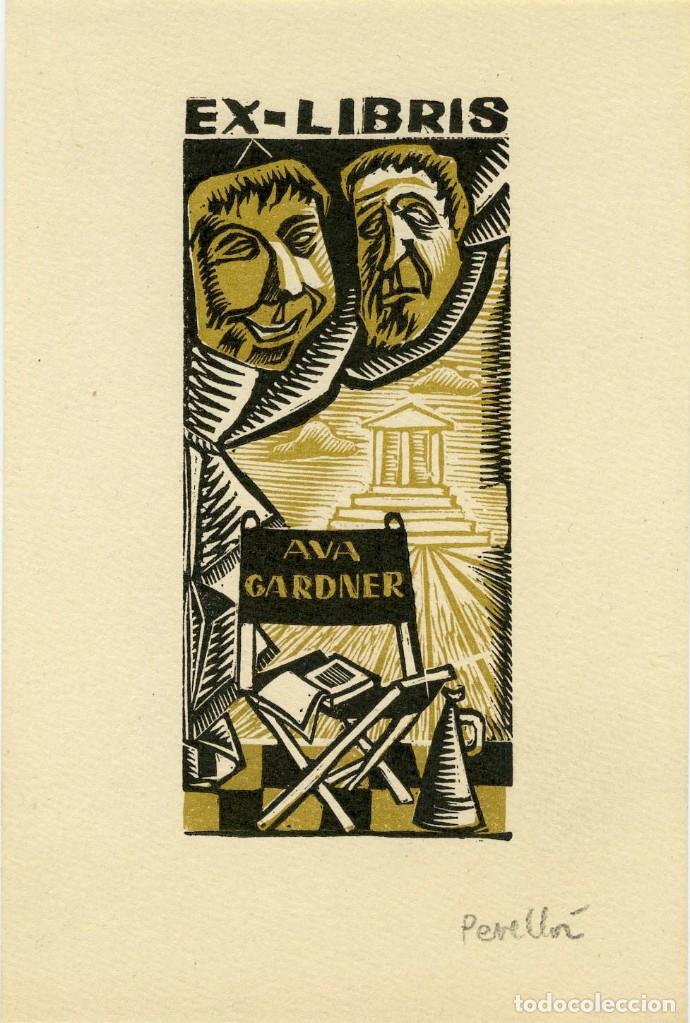
La obra gráfica de Perellón, centrada en el dibujo y el grabado, se vincula de forma natural con el universo del exlibris. Su precisión técnica, su dominio del trazo y su imaginario simbólico lo convierten en un autor especialmente afín a esta disciplina.
En sus composiciones se percibe una clara voluntad estética, donde la figura femenina, tratada con sensibilidad y complejidad, se integra en un lenguaje visual rico en sugerencias y significados, aportando al exlibris una dimensión artística de gran intensidad.
Biography
Celedonio Perellón Cardona (Madrid, 1926–2015) was a distinguished Spanish painter, engraver and illustrator, regarded as one of the pioneers of erotic art in Spain and a singular figure within contemporary art.
Born in the Lavapiés district of Madrid, he discovered his artistic vocation in his father’s bookbinding workshop. Although he studied at the School of Arts and Crafts and at the San Fernando School of Fine Arts, he always defined himself as self-taught.
He gained early recognition as an illustrator, receiving the Lazarillo Prize in 1963 and the Medal of the Bratislava Biennial in 1967, and he was also a finalist for the Andersen Prize on several occasions. In this field he created the character “Bunda”, which achieved notable international success.
His painting evolved from social realism towards a personal language in which the female nude became the central axis of his work. Through this theme he developed a symbolic, sensual and poetic universe, with clear surrealist resonances.
He exhibited in numerous Spanish and European cities from the late 1960s onward. From the 1980s he focused his activity on editorial illustration, collaborating with Liber Ediciones on works such as The Decameron, awarded the National Prize for Best Edited Book in 2005, as well as other equally acclaimed titles.
A master of printmaking, he worked with techniques such as etching, aquatint, drypoint and lithography, showing exceptional technical command. His work forms part of collections such as the National Library of Spain and the Museum of Contemporary Spanish Engraving.
An independent artist with an unmistakable personality, Perellón left behind a deeply poetic body of work in which the figurative and the symbolic merge into a unique visual language.
Celedonio Perellón and the Bookplate
Perellón’s graphic work, centred on drawing and engraving, is naturally linked to the world of the bookplate. His technical precision, mastery of line and symbolic imagination make him an artist especially close to this discipline.
In his compositions one perceives a clear aesthetic intention, in which the female figure, treated with sensitivity and complexity, is integrated into a visual language rich in suggestion and meaning, giving the bookplate an artistic dimension of great intensity.
Biographie
Celedonio Perellón Cardona (Madrid, 1926–2015) fut un peintre, graveur et illustrateur espagnol de premier plan, considéré comme l’un des précurseurs de l’art érotique en Espagne et comme une figure singulière de l’art contemporain.
Né dans le quartier de Lavapiés à Madrid, il découvrit sa vocation artistique dans l’atelier de reliure de son père. Bien qu’il se soit formé à l’École des Arts et Métiers puis à l’École des Beaux-Arts de San Fernando, il se définissait toujours comme autodidacte.
Il obtint très tôt une reconnaissance en tant qu’illustrateur, recevant le Prix Lazarillo en 1963 et la Médaille de la Biennale de Bratislava en 1967, tout en étant finaliste du Prix Andersen à plusieurs reprises. Dans ce domaine, il créa le personnage “Bunda”, qui connut un important succès international.
Sa peinture évolua du réalisme social vers un langage personnel, dans lequel le nu féminin devint l’axe central de son œuvre. À travers ce thème, il développa un univers symbolique, sensuel et poétique, aux résonances nettement surréalistes.
Il exposa dans de nombreuses villes espagnoles et européennes à partir de la fin des années soixante. Dès les années quatre-vingt, il concentra son activité sur l’illustration éditoriale, collaborant avec Liber Ediciones pour des ouvrages comme Le Décaméron, Prix national du livre le mieux édité en 2005, ainsi que pour d’autres titres également reconnus.
Maître de la gravure, il travailla avec des techniques telles que l’eau-forte, l’aquatinte, la pointe sèche ou la lithographie, faisant preuve d’une maîtrise technique exceptionnelle. Son œuvre fait partie de collections telles que la Bibliothèque nationale d’Espagne ou le Musée de la gravure espagnole contemporaine.
Artiste indépendant à la personnalité inimitable, Perellón a laissé une œuvre profondément poétique, où le figuratif et le symbolique se fondent dans un langage unique.
Celedonio Perellón et l’ex-libris
L’œuvre graphique de Perellón, centrée sur le dessin et la gravure, se rattache naturellement à l’univers de l’ex-libris. Sa précision technique, sa maîtrise du trait et son imaginaire symbolique font de lui un auteur particulièrement proche de cette discipline.
Dans ses compositions, on perçoit une claire volonté esthétique, où la figure féminine, traitée avec sensibilité et complexité, s’intègre dans un langage visuel riche en suggestions et en significations, apportant à l’ex-libris une dimension artistique d’une grande intensité.