



The printmaking technique of screen printing
Introduction
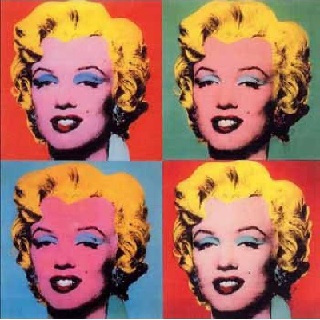
Screen printing is a printing technique belonging to the field of graphic art that consists of transferring ink through a mesh stretched over a frame. Certain areas of the screen are blocked to prevent the ink from passing through, while others remain open to form the printed image.
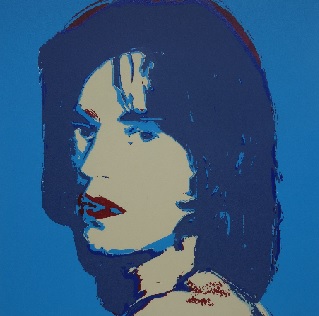
In the artistic context, this technique makes it possible to produce multiple editions of an original work, while preserving a manual process controlled by the artist. Thanks to its ability to create intense colours and uniform surfaces, screen printing became a fundamental technique in twentieth-century contemporary art (Ross, Romano & Ross, 1990).
Origin and history
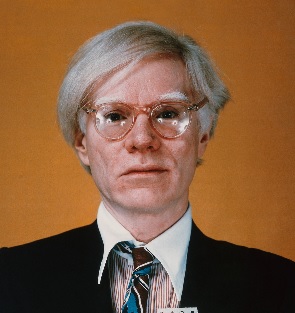
The earliest techniques related to screen printing originated in Asia, especially in China and Japan, where stencils were used to decorate textiles. Modern screen printing developed during the twentieth century and was soon adopted by artists exploring new forms of graphic reproduction (Griffiths, 1996).
Among the best-known artists who used this technique are Andy Warhol, Roy Lichtenstein, Robert Rauschenberg and Eduardo Paolozzi. Warhol, in particular, popularised screen printing within the Pop Art movement by reproducing images from mass culture such as celebrities, commercial products and press photographs (Livingstone, 1990).
Other contemporary artists such as Bridget Riley, Shepard Fairey and Julian Opie have also used screen printing to produce limited editions of their works, taking advantage of its capacity for flat colours and sharply defined graphic compositions.
Materials and tools
Artistic screen printing uses a frame with a polyester or silk mesh that acts as the printing matrix. A photosensitive emulsion is applied to the screen to create the open areas of the design. The printing process uses specific inks, a squeegee to push the ink through the mesh, and fine art papers suitable for graphic work.
Process
The process begins with the preparation of the screen, where the image that will allow the ink to pass through is defined. In works with several colours, a different screen is used for each one.
During printing, the ink is spread across the screen and pressed with a squeegee so that it passes through the open areas of the mesh. This process is repeated for each colour in the image. Once printing is complete, the sheets are left to dry and the quality of the edition is checked.
Characteristics of screen printing
- It allows for intense, even flat colours.
- It provides great precision in the contours of the image.
- It allows the superimposition of multiple layers of colour.
- It is suitable for producing limited editions of graphic art.
These characteristics have made screen printing a technique especially valued by artists interested in image reproduction and in exploring the language of contemporary graphic art (Gascoigne, 2004).
Conclusion
Screen printing is one of the most relevant techniques within contemporary graphic art. Its ability to combine serial production with artistic control has enabled many artists to investigate new relationships between art, reproduction and image.
From the rise of Pop Art to current graphic production, screen printing continues to be a fundamental medium for the creation of artistic editions and for the dissemination of graphic art.
Bibliography
- Gascoigne, B. (2004). How to Identify Prints. Thames & Hudson.
- Griffiths, A. (1996). Prints and Printmaking. University of California Press.
- Ross, J., Romano, C., & Ross, T. (1990). The Complete Printmaker. Free Press.
- Leaf, R. (1988). Screen Printing: The Complete Water-Based System. Watson-Guptill.
- Livingstone, M. (1990). Pop Art: A Continuing History. Thames & Hudson.