



The printmaking technique of lithography
Introduction
Lithography is a planographic printmaking technique based on the chemical principle of the repulsion between grease and water. Unlike other printmaking techniques such as etching or woodcut, lithography does not require incisions on the surface of the matrix, but is carried out on a flat surface.
Since its invention at the end of the eighteenth century, this technique made it possible to reproduce images with great fidelity and speed, contributing to the spread of illustrations, posters, publications and works of art. Over time, lithography became one of the fundamental techniques both in the artistic field and in the printing industry.
Origin and historical development

Lithography was invented in 1796 by the German Alois Senefelder. Senefelder was looking for an economical system to reproduce musical scores and discovered that he could draw on a limestone surface using greasy materials. When he later applied water and greasy ink, he observed that the ink adhered only to the drawn areas.
During the nineteenth century, the technique spread rapidly throughout Europe and America. It was used to print advertising posters, press illustrations, maps, books and sheet music. Its ability to reproduce the line of drawing with great precision led many artists to adopt it as a means of expression.
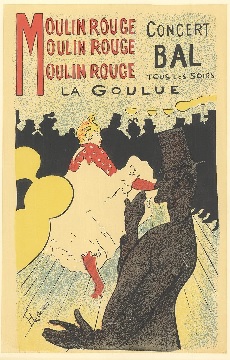
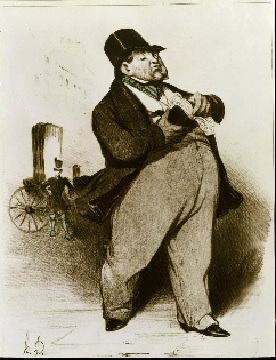
Among the artists who used lithography were Honoré Daumier, known for his political caricatures published in the French press; Henri de Toulouse-Lautrec, famous for his posters for Parisian cabarets; and Pablo Picasso, who explored this technique extensively in the twentieth century.
Technical principles of lithography
Lithography is based on a simple chemical principle: water and grease repel each other. This property allows an image drawn with greasy materials to be transferred onto paper through a selective inking process.
The traditional matrix is a very fine and porous limestone, although metal plates were later developed, mainly aluminium or zinc. On this surface the artist draws with lithographic crayons or greasy inks.
After the drawing is completed, the surface is treated with a mixture of gum arabic and acid, which fixes the image and prepares the non-drawn areas to retain water. When the stone is dampened, the water occupies the areas without drawing. When greasy ink is applied with a roller, it adheres only to the greasy areas of the drawing. Finally, by means of a lithographic press, the image is transferred to paper.
Process
The traditional lithographic process consists of several stages:
- Preparation of the stone: A polished limestone is used and carefully smoothed to obtain an even surface.
- Drawing: The artist draws directly on the stone with lithographic crayon or greasy ink.
- Fixing: A solution of gum arabic and nitric acid is applied to fix the drawing and chemically prepare the surface.
- Dampening: Before inking, the stone is moistened. Water remains in the non-greasy areas.
- Inking: A roller with greasy ink is passed over the surface. The ink adheres only to the drawn areas.
- Printing: The paper is placed on the stone and pressed in a lithographic press to transfer the image.
This process can be repeated many times to produce multiple copies of the same image.
Importance and evolution
During the nineteenth century, lithography was one of the most important printing techniques for the dissemination of images in newspapers, posters and illustrated publications. It later evolved into offset lithography, the basis of much modern industrial printing.
Although much faster digital methods exist today, lithography remains a fundamental technique within artistic printmaking, used in workshops and art schools for its ability to reproduce faithfully the gesture and texture of drawing.
Conclusion
Lithography occupies an essential place in the history of graphic arts. Its procedure, based on the chemistry of apparently simple materials, made it possible to transform image reproduction and greatly expand its circulation.
From the late eighteenth century to the present day, this technique has retained its value both in the artistic sphere and in commercial printing, and it continues to be appreciated for the visual richness of its results and for its historical relevance in the evolution of printmaking.
Bibliography
- Gascoigne, B. (2004). How to Identify Prints. London: Thames & Hudson.
- Griffiths, A. (1996). Prints and Printmaking: An Introduction to the History and Techniques. Berkeley: University of California Press.
- Griffiths, A. (2016). The Print Before Photography. London: British Museum Press.
- Ivins, W. M. (1969). Prints and Visual Communication. Cambridge: MIT Press.
- Ross, J., Romano, C. and Ross, T. (1990). The Complete Printmaker. New York: Free Press.