



Remo Wolf
Biografía
Remo Wolf nació en Trento (Italia) el 29 de febrero de 1912. Hijo de Adolfo Wolf y Giuseppina Gandolfi, creció en un ambiente profundamente marcado por la formación religiosa recibida en asociaciones católicas, una influencia que se reflejaría más tarde en la dimensión espiritual de su obra.
Inició su formación artística en la Escuela Técnico-Industrial de Trento, donde fue discípulo de Stefano Zueg, y la continuó en el Instituto de Arte de Parma. En 1929 se trasladó a Florencia, donde perfeccionó la técnica de la xilografía y trabajó como ilustrador para la revista Il Frontespizio, dirigida por Giovanni Papini.
Durante la Segunda Guerra Mundial se alistó voluntariamente y en 1942 fue hecho prisionero por las tropas británicas, siendo trasladado a un campo de internamiento en Egipto. Tras la guerra regresó a Italia y reanudó su trayectoria artística.
En los años cincuenta participó activamente en la vida cultural trentina y formó parte del entorno del Caffè degli Specchi. En 1952 colaboró en la fundación del Centro Cultural “Fratelli Bronzetti”, dedicado al estudio y difusión del grabado.
En la década de 1960 desarrolló la innovadora técnica del legno perso di filo, un procedimiento xilográfico de gran complejidad basado en impresiones sucesivas a partir de una matriz trabajada según la veta de la madera. Gracias a ello fue reconocido como uno de los grandes renovadores del grabado italiano del siglo XX.
Presidió en varias ocasiones la Bienal del Grabado y recibió la Medalla de Oro al Mérito en Cultura y Arte. Su producción, austera, intensa y de fuerte acento espiritual, lo consolidó como una figura esencial dentro de la gráfica italiana contemporánea.
Remo Wolf y el exlibris
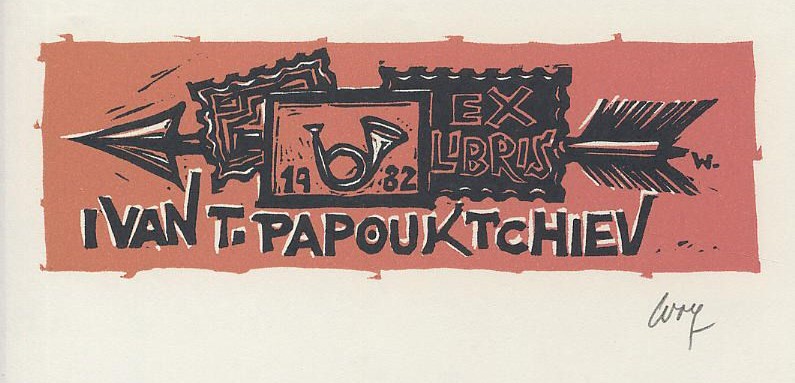
El exlibris ocupa un lugar destacado dentro de su obra gráfica. En sus estampas se unen la maestría técnica de la xilografía, la capacidad simbólica de la imagen y una visión artística profundamente personal. Su trabajo contribuye a situar el exlibris como una forma de creación plena dentro del grabado del siglo XX.
Biography
Remo Wolf was born in Trento, Italy, on February 29, 1912. Raised in a Catholic environment, he received an early religious education that would later shape the spiritual dimension of his artistic language.
He studied at the Technical Industrial School of Trento under Stefano Zueg and later continued his training at the Art Institute of Parma. In 1929 he moved to Florence, where he specialised in woodcut printmaking while working as an illustrator for the magazine Il Frontespizio, directed by Giovanni Papini.
During the Second World War he volunteered for military service and in 1942 was captured by British forces and taken to a prisoner-of-war camp in Egypt. After the war he returned to Italy and resumed his artistic activity.
In the 1950s he became involved in the cultural life of Trento and took part in the circle of the Caffè degli Specchi. In 1952 he helped found the cultural centre “Fratelli Bronzetti”, devoted to engraving.
In the 1960s he developed the innovative legno perso di filo technique, a complex woodcut process based on progressive colour printing from a matrix carved following the grain of the wood. This achievement established him as one of the most original Italian printmakers of the twentieth century.
He served several times as president of the Biennial of Engraving and was awarded the Gold Medal for Merit in Culture and Art. His work, austere, expressive and spiritually intense, remains a significant contribution to modern Italian printmaking.
Remo Wolf and the Bookplate
Bookplates hold an important place in his graphic work. His prints combine technical mastery, symbolic richness and a highly personal artistic vision, confirming his relevance within twentieth-century ex-libris art.
Biographie
Remo Wolf est né à Trente, en Italie, le 29 février 1912. Élevé dans un milieu catholique, il reçoit une formation religieuse précoce qui influencera durablement la dimension spirituelle de son œuvre.
Il étudie à l’École technique industrielle de Trente auprès de Stefano Zueg, puis poursuit sa formation à l’Institut d’Art de Parme. En 1929, il s’installe à Florence, où il se spécialise dans la gravure sur bois tout en travaillant comme illustrateur pour la revue Il Frontespizio, dirigée par Giovanni Papini.
Pendant la Seconde Guerre mondiale, il s’engage volontairement et est capturé en 1942 par les troupes britanniques, puis interné en Égypte. Après la guerre, il rentre en Italie et reprend son activité artistique.
Dans les années 1950, il participe activement à la vie culturelle de Trente et fréquente le cercle du Caffè degli Specchi. En 1952, il contribue à la fondation du Centre culturel “Fratelli Bronzetti”, consacré à la gravure.
Au cours des années 1960, il met au point la technique innovante du legno perso di filo, un procédé complexe d’impression en couleurs successives à partir d’une matrice gravée selon le fil du bois. Cette invention fait de lui l’un des graveurs italiens les plus originaux du XXe siècle.
Président à plusieurs reprises de la Biennale de la gravure, il reçoit également la Médaille d’or du mérite pour la culture et l’art. Son œuvre, sobre, intense et profondément spirituelle, occupe une place importante dans la gravure italienne contemporaine.
Remo Wolf et l’ex-libris
L’ex-libris occupe une place notable dans sa production graphique. Ses estampes associent maîtrise technique, richesse symbolique et vision artistique personnelle, ce qui lui confère une place reconnue dans l’histoire de l’ex-libris du XXe siècle.