



Kósa Bálint
Biografía
Kósa Bálint nació el 14 de febrero de 1932 en Olasztelek, en Transilvania, actual Rumanía, y falleció en febrero de 2017. Fue un destacado grabador húngaro de Transilvania, especialmente reconocido por sus xilografías y por su producción de exlibris.
Desde niño mostró una clara inclinación por el dibujo. Sus primeros cuadernos se llenaron de animales domésticos, flores, insectos y escenas tomadas de la naturaleza. También se sintió pronto atraído por la historia húngara, realizando pequeñas esculturas y relieves inspirados en personajes históricos.
Aunque varios maestros advirtieron su talento artístico, las circunstancias familiares le llevaron inicialmente hacia una formación técnica. Aprendió el oficio de tornero mecánico y trabajó en talleres y explotaciones mineras antes de ingresar en la Universidad Bolyai de Cluj, donde estudió Biología y Química y se licenció en 1957.
Durante su etapa universitaria mantuvo contacto con artistas y especialistas que influyeron decisivamente en su formación gráfica. También recibió enseñanzas relacionadas con la heráldica y la composición, aspectos que más tarde tendrían importancia en su obra.
Su vida estuvo marcada por las dificultades políticas del régimen comunista rumano. Participó en el ambiente estudiantil surgido durante la Revolución Húngara de 1956 y, debido a sus opiniones y actividades consideradas contrarias al régimen, fue arrestado en 1959. Fue condenado a prisión política, privación de derechos y confiscación de bienes. Tras ser amnistiado en 1961, trabajó como obrero mientras retomaba progresivamente su actividad artística.
El gran giro de su trayectoria llegó en 1968, cuando descubrió la obra del célebre xilógrafo Gy. Szabó Béla. A partir de entonces se dedicó intensamente al grabado en madera. Gy. Szabó Béla se convirtió en su maestro y mentor durante varios años, orientando su aprendizaje técnico y artístico.
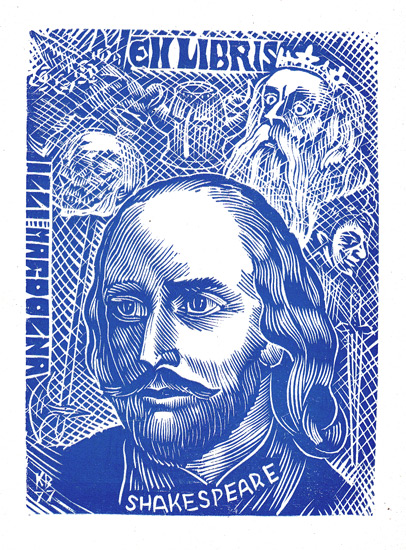
Kósa Bálint desarrolló una obra gráfica de fuerte personalidad, caracterizada por el rigor del trazo, la sensibilidad hacia la naturaleza, la presencia de la tradición húngara y una intensa carga simbólica. Dentro de su producción ocuparon un lugar destacado los exlibris, en los que combinó precisión artesanal, sentido decorativo y capacidad narrativa.
A lo largo de varias décadas obtuvo numerosos reconocimientos y sus grabados pasaron a formar parte del patrimonio cultural de Transilvania. Su figura representa la fidelidad a una vocación artística mantenida incluso en circunstancias difíciles, así como una importante aportación al mundo del grabado y del exlibris.
Biography
Kósa Bálint was born on 14 February 1932 in Olasztelek, Transylvania, now Romania, and died in February 2017. He was an important Hungarian printmaker from Transylvania, especially known for his woodcuts and ex libris works.
From early childhood he showed a remarkable talent for drawing. His first sketchbooks were filled with domestic animals, flowers, insects and scenes inspired by the natural world around him. He also developed an early interest in Hungarian history, creating small sculptures and reliefs based on historical figures.
Although several teachers recognised his artistic talent, family circumstances initially led him towards technical training. He learned the trade of metal turner and worked in industrial workshops and mining areas before entering Bolyai University in Cluj, where he studied Biology and Chemistry and graduated in 1957.
During his university years he came into contact with artists and specialists who had a decisive influence on his graphic education. He also received instruction in heraldry and composition, elements that would later become important in his work.
His life was deeply marked by the political difficulties of the Romanian communist regime. He took part in the student atmosphere surrounding the Hungarian Revolution of 1956 and, because of opinions and activities considered hostile to the regime, was arrested in 1959. He was sentenced to political imprisonment, deprivation of civil rights and confiscation of property. After being amnestied in 1961, he worked as a labourer while gradually returning to artistic activity.
The turning point in his artistic career came in 1968, when he discovered the work of the celebrated woodcut artist Gy. Szabó Béla. From that moment onwards he devoted himself intensely to wood engraving. Gy. Szabó Béla became his teacher and mentor for several years, guiding both his technical and artistic development.
Kósa Bálint created a highly personal body of graphic work, marked by precise line, sensitivity to nature, Hungarian tradition and a strong symbolic dimension. Ex libris occupied an important place in his production, combining craftsmanship, decorative balance and narrative power.
Over several decades he received numerous distinctions, and his prints became part of Transylvania’s cultural heritage. His life and work stand as a testimony to artistic vocation, resilience and a significant contribution to the world of printmaking and ex libris.
Biographie
Kósa Bálint est né le 14 février 1932 à Olasztelek, en Transylvanie, dans l’actuelle Roumanie, et mort en février 2017. Il fut un important graveur hongrois de Transylvanie, particulièrement reconnu pour ses xylogravures et ses ex-libris.
Dès l’enfance, il manifesta un talent remarquable pour le dessin. Ses premiers cahiers furent remplis d’animaux domestiques, de fleurs, d’insectes et de scènes inspirées par la nature. Il développa également très tôt un vif intérêt pour l’histoire hongroise, réalisant de petites sculptures et des reliefs consacrés à des personnages historiques.
Bien que plusieurs enseignants aient remarqué ses dons artistiques, les circonstances familiales l’orientèrent d’abord vers une formation technique. Il apprit le métier de tourneur sur métal et travailla dans des ateliers industriels et des exploitations minières avant d’entrer à l’Université Bolyai de Cluj, où il étudia la biologie et la chimie et obtint son diplôme en 1957.
Pendant ses années universitaires, il entra en contact avec des artistes et des spécialistes qui influencèrent profondément sa formation graphique. Il reçut également des enseignements liés à l’héraldique et à la composition, éléments qui jouèrent par la suite un rôle important dans son œuvre.
Sa vie fut profondément marquée par les difficultés politiques du régime communiste roumain. Il participa au climat étudiant né autour de la Révolution hongroise de 1956 et, en raison d’opinions et d’activités considérées comme hostiles au régime, fut arrêté en 1959. Il fut condamné à une peine de prison politique, à la privation de droits civils et à la confiscation de ses biens. Amnistié en 1961, il travailla comme ouvrier tout en reprenant progressivement son activité artistique.
Le tournant décisif de sa carrière eut lieu en 1968, lorsqu’il découvrit l’œuvre du célèbre xylographe Gy. Szabó Béla. Dès lors, il se consacra intensément à la gravure sur bois. Gy. Szabó Béla devint son maître et mentor pendant plusieurs années, guidant son apprentissage technique et artistique.
Kósa Bálint développa une œuvre graphique très personnelle, caractérisée par la précision du trait, la sensibilité à la nature, la présence de la tradition hongroise et une forte dimension symbolique. Les ex-libris occupèrent une place importante dans sa production, où il sut associer maîtrise artisanale, équilibre décoratif et puissance narrative.
Au fil des décennies, il reçut de nombreuses distinctions et ses gravures intégrèrent le patrimoine culturel de la Transylvanie. Sa vie et son œuvre témoignent d’une vocation artistique fidèle, d’une grande résistance face à l’adversité et d’une contribution importante au monde de la gravure et de l’ex-libris.