



The etching printmaking technique
Introduction
Etching is an intaglio printmaking technique in which a metal plate coated with an acid-resistant ground is drawn upon and then exposed to acid. The acid bites into the exposed lines, creating grooves that hold ink. During printing, the inked plate is pressed onto paper using a printing press, transferring the image to the paper.
This technique produces expressive and spontaneous lines similar to those created with pen and ink. Because of these qualities, etching became one of the most important printmaking techniques in European art from the sixteenth century onwards.
Origin and history
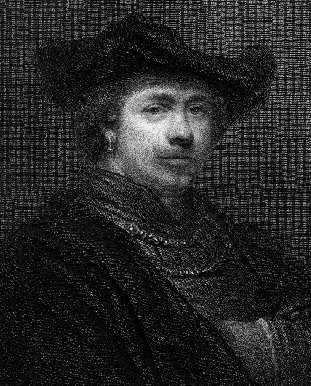
The origins of etching can be traced back to the Renaissance. It was initially used by craftsmen to decorate armor and metal objects using acid. Over time, artists adopted this method to produce printed images.
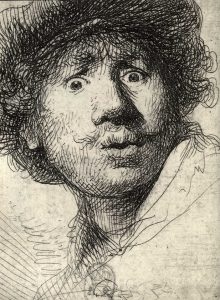
Among the great masters of etching are Rembrandt, Albrecht Dürer and Francisco de Goya. Rembrandt in particular developed the technique to an extraordinary level, experimenting with different line depths and combining it with other printmaking methods.
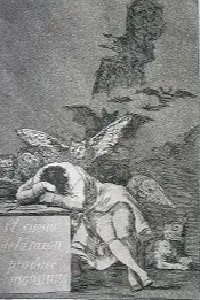
Francisco de Goya also used etching in several famous print series such as Los Caprichos (1799), often combining it with aquatint to create dramatic contrasts of light and shadow.
Materials and tools
Etching uses a metal plate (usually copper or zinc) coated with an acid-resistant ground. The artist draws on this surface with a sharp needle, exposing the metal beneath. The plate is then placed in an acid bath which bites the exposed lines. For printing, the artist uses intaglio ink, tarlatan cloth to wipe excess ink, a printing press, and dampened printmaking paper.
Process
First the metal plate is cleaned and covered with the protective ground. The artist then draws through the ground with a needle to expose the metal. The plate is immersed in acid, which bites into the exposed areas and forms grooves. After removing the ground, ink is applied to the plate and wiped so that ink remains only in the grooves. Finally the plate is printed on damp paper using a press, producing the final print.
Characteristics of etching
- Produces fluid and expressive lines
- Allows a high level of detail
- Can be combined with techniques such as aquatint or drypoint
- Allows multiple prints to be produced from a single plate
Conclusion
Etching has played a fundamental role in the history of printmaking. Its ability to translate drawing into engraved lines on metal and then into printed images on paper has allowed artists to explore rich graphic possibilities.
From the Renaissance to the present day, etching continues to be appreciated for its expressive quality and technical complexity.